

Thinking About a Second Passport in 2026? Read This First
The golden age of easily acquiring a second passport is over. If you're considering citizenship by investment in 2026, you've likely noticed that the landscape has shifted dramatically. Prices are exploding, popular programs are shutting down, and the rules are getting stricter. This isn't just hype; it's a new reality for investors seeking greater travel freedom and global security. This guide will break down what’s really happening, expose the risks, and reveal what smart investors are doing to navigate this evolving market.
The End of Cheap Second Passports: What Changed in 2026

The era of bargain-priced citizenship by investment has officially come to a close. For years, investors could secure a second passport for a relatively low investment amount, but that is no longer the case. A combination of surging demand, geopolitical pressures, and stricter due diligence has transformed the market.
This shift means that the application process is more rigorous and the financial bar is significantly higher. Caribbean programs have raised their prices, European options have dwindled, and compliance has become the new watchword. We’ll explore these changes in more detail below.
Caribbean Price Surges and EU CBI Program Closures

One of the most significant changes has been the price hike across popular Caribbean citizenship programs. For example, the minimum contribution to the National Development Fund in countries like Saint Kitts & Nevis has increased substantially. What was once a more accessible route to a second passport now requires a much larger capital outlay.
Simultaneously, the European Union has cracked down on CBI programs within its member states. Countries like Cyprus and Malta have either suspended or heavily revised their programs, effectively closing the door for many investors seeking an EU passport through direct investment. This has removed some of the most sought-after options from the market.
This dual pressure of rising costs in the Caribbean and closures in Europe has fundamentally altered the supply-and-demand dynamic. Investors now face fewer, more expensive choices, making a strategic approach essential. Options like purchasing government bonds or real estate still exist, but the entry points are higher.
Stricter Due Diligence and Heightened Compliance
In 2026, applying for citizenship by investment is a far more scrutinized process. Governments are under intense international pressure to ensure their programs are not misused. As a result, due diligence has become incredibly thorough, with comprehensive background checks on applicants and their sources of wealth. This is a critical legal requirement for securing a second passport.
The application process now involves mandatory interviews for all Caribbean programs, a recent develoepment that adds another layer of screening. You should expect every detail of your financial history and personal background to be examined. This heightened compliance aims to protect the integrity and reputation of the host countries.
These stricter measures also come with increased costs. Due diligence fees have risen to cover the expense of these intensive checks. Navigating the complex legal framework and documentation requirements now demands expert guidance to avoid delays or rejection, making the process more challenging than ever before.
Data on the Shrinking Landscape of CBI Programs 2026

The market for citizenship by investment is not just more expensive; it's also smaller. Several prominent programs have been discontinued, limiting the investment options available to global investors. Countries that once offered a relatively straightforward application process for a second passport have now closed their doors.
Programs in European Union nations like Cyprus and Montenegro are no longer available, removing a direct path to an EU passport via investment. Even Moldova's program, once an accessible option, has been suspended. This trend reflects a global move toward tighter regulations and away from the "golden visa" models of the past.
This reduction in available programs places more pressure on the remaining ones, particularly the Caribbean programs, contributing to the price increases.
Understanding the Demand Surge for Citizenship by Investment
The sharp increase in citizenship by investment prices is a direct result of unprecedented demand. High-net-worth individuals and foreign investors from around the world are increasingly seeking the security and mobility that a second passport provides. This isn't just about convenience; it's a strategic move to mitigate risk.
This demand surge is fueled by a combination of factors, including global political instability, economic uncertainty, and a desire for a reliable backup plan. As more people compete for a shrinking number of investor visa and citizenship opportunities, the market has responded with higher costs. Let's examine the key drivers behind this trend.
Why More Investors Are Seeking Second Passports

A primary reason more foreign nationals are pursuing a second passport is the desire for enhanced global mobility. In a world with ever-changing travel restrictions, a powerful second passport offers invaluable travel freedom, allowing visa-free access to key regions like the Schengen Area, the UK, and Asia. This is a powerful tool for business and leisure.
Beyond travel, investors are seeking a "Plan B." A second citizenship provides a safe haven for them and their families in times of political or economic turmoil in their home country. It’s a form of insurance, offering a secure place to live, work, and hold assets if the need ever arises.
Finally, the benefits extend to wealth management and business opportunities. A second passport can unlock access to international banking, enable tax optimization strategies, and facilitate global business operations without the constraints faced by citizens of certain countries. The investment requirements, while steep, are often seen as a price worth paying for this level of freedom and security.
Political Instability and Shifting Global Risks
Current global dynamics are a major catalyst for the second passport boom. Rising political instability in various parts of the world has prompted many to seek a reliable backup plan. The uncertainty in one's home country can threaten personal safety, financial assets, and overall quality of life.
A second citizenship acts as the ultimate insurance policy against these risks. It provides a secure alternative jurisdiction where you and your family can relocate if circumstances at home become untenable. This is no longer a luxury for the ultra-rich but a strategic necessity for anyone with a global perspective.
Thinking long-term, investors also see a second passport as a way to secure opportunities for future generations. Citizenship can often be passed down, granting children and grandchildren the same global mobility and security. This forward-thinking approach is a key motivation for many who embark on the citizenship by investment journey.
The Imbalance Between Supply and Demand
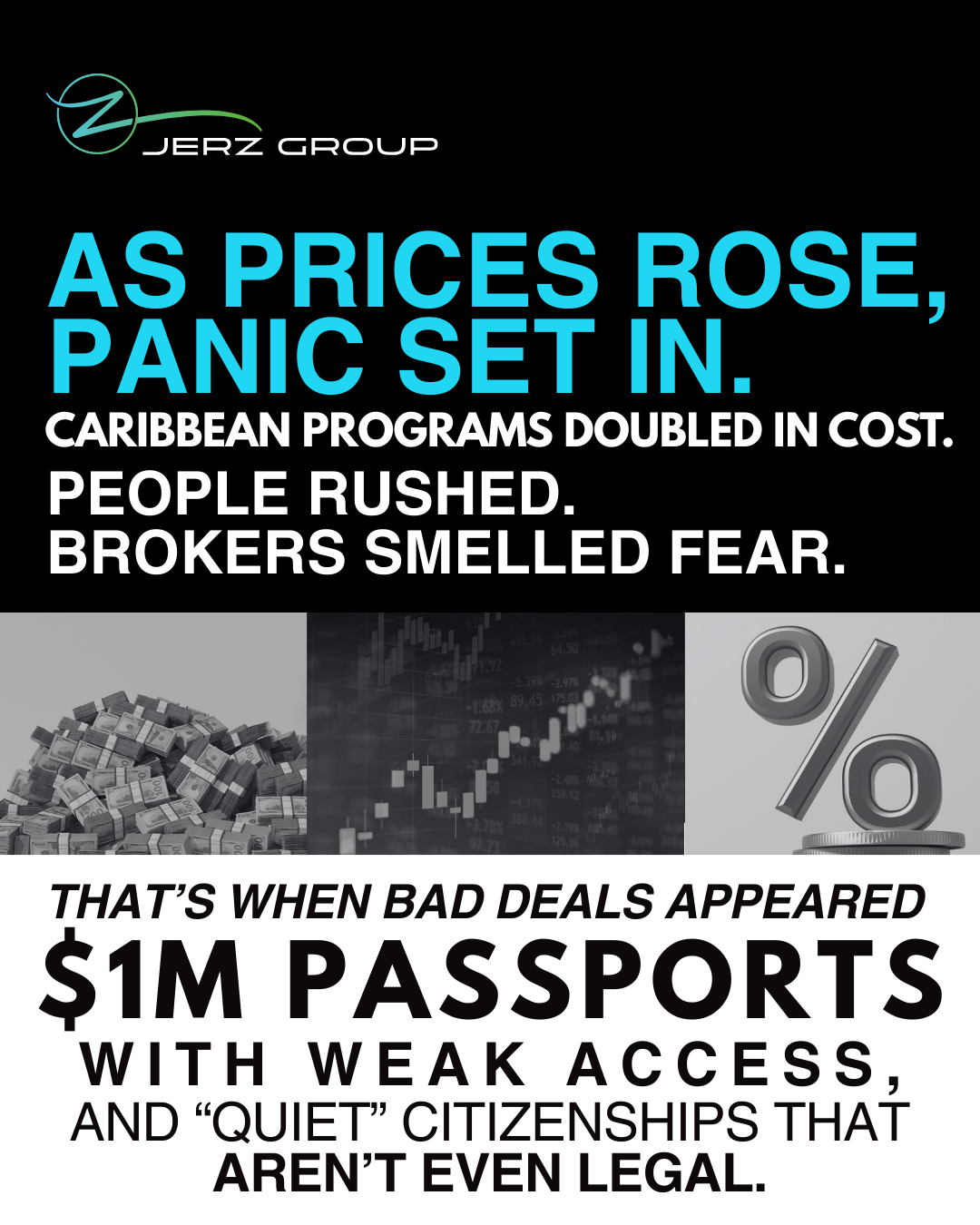
The core reason second passport prices are increasing is a classic case of supply and demand. As we've seen, the number of reputable citizenship by investment programs has decreased, particularly in Europe. This shrinking supply is colliding with a record-breaking surge in demand from investors worldwide.
When more people are chasing fewer investment options, prices inevitably rise. Host countries can afford to be more selective and can command a higher minimum investment. They have little incentive to keep prices low when the queue of willing applicants continues to grow.
This imbalance is most evident in the Caribbean, where programs have collectively raised their donation and real estate investment thresholds. Governments are capitalizing on the high demand to fund national development projects, but for investors, it means the entry cost for a valuable second passport is now significantly higher than it was just a few years ago.
Core Benefits of a Second Passport in 2026
Despite the rising costs and stricter rules, the core benefits of a second passport remain as compelling as ever in 2026. For savvy investors, it's not just a travel document but a powerful tool for enhancing personal and financial freedom. The primary advantage is greatly improved global mobility for international travel.
A second citizenship opens doors to a world of opportunities, from wealth protection and diversification to enhanced personal safety. It provides a strategic advantage in an unpredictable world. Let’s look at the key benefits you can expect from making such an investment.
Enhanced International Travel and Visa-Free Mobility

One of the most immediate and tangible benefits of a second passport is the dramatic increase in visa-free mobility. Depending on the passport strength, you could gain access to over 140 countries without the hassle of applying for a visa. This includes highly desirable destinations like the Schengen Area, the United Kingdom, Hong Kong, and Singapore.
This level of travel freedom is a game-changer for business executives, entrepreneurs, and frequent travelers. It allows for spontaneous trips and eliminates the bureaucratic delays and uncertainties associated with visa applications. You can attend an urgent meeting in Europe or take a last-minute vacation with ease.
Ultimately, a second passport gives you control over your own movement. You are no longer solely dependent on the diplomatic relations of your home country. This freedom is a core pillar of a global mobility strategy, providing you with options and flexibility that a single passport simply cannot offer.
Wealth Protection Through Global Diversification
A second passport is a cornerstone of a robust wealth protection strategy. It allows you to achieve true global diversification by holding assets in multiple jurisdictions. This protects you from economic instability, capital controls, or unfair seizure of assets in your home country.
With a second citizenship, you can open a bank account abroad, purchase international real estate, and make investments outside your primary jurisdiction. This diversification spreads your financial risk. For example, a real estate investment in a stable Caribbean nation can act as both a financial asset and a potential second home.
Furthermore, there can be significant tax advantages. By becoming a tax resident in a country with a favorable tax regime, you may be able to legally reduce your burden on income, inheritance, and capital gains. While a second passport itself doesn't automatically grant tax benefits, it provides the jurisdictional flexibility needed to structure your finances more efficiently.
Personal Safety, Privacy, and Planning Advantages

In an unpredictable world, personal safety is a top priority. A second passport provides the ultimate backup plan, offering a safe haven for you and your family members should you need to relocate quickly. This peace of mind is invaluable, knowing you have a secure alternative if your home country faces political turmoil, social unrest, or natural disaster.
A second passport can also enhance your privacy. Traveling on a passport from a neutral, smaller country can often make you a less conspicuous target when abroad. It adds a layer of discretion that can be beneficial for high-profile individuals.
This level of planning extends to your entire family. Most citizenship by investment programs allow you to include your spouse, children, and sometimes even parents or grandparents in the application. This ensures your loved ones are also protected and can enjoy the same global mobility and security benefits, securing their future for generations to come.
The $1M El Salvador Passport: Is It Worth the Investment?

A new and highly debated player has entered the citizenship by investment arena: the El Salvador "Freedom Visa." With a price tag of $1 million, it is one of the most expensive options on the market. This high investment amount raises a critical question for investors: is it a smart strategic move or just a well-marketed trap?
To answer this, you need to look beyond the headline price and analyze what the program actually delivers. A thorough evaluation of its legal framework, visa-free travel benefits, and comparison to established alternatives is essential. A $1 million passport must offer exceptional value to justify its cost, and a careful due diligence process is required to determine if it meets that standard.
What the Program Offers: Pros, Cons, and Realities

The El Salvador Freedom Visa is positioned as an exclusive offering, limited to 1,000 applicants per year. The main investment option is a $1 million non-refundable donation made in Bitcoin or Tether. The government promises a streamlined application process, aiming for a quick turnaround.
However, the tangible benefits of a second passport from El Salvador are still somewhat unclear compared to more established programs. While it provides citizenship in a country known for its pro-Bitcoin stance, its passport strength and visa-free access are less competitive than many Caribbean options that cost significantly less.
Here are some key points to consider:
- High Cost: The $1 million donation is non-refundable and one of the highest in the CBI market.
- Limited Track Record: As a new program, it lacks the history and proven stability of Caribbean counterparts.
- Niche Appeal: It is primarily targeted at cryptocurrency enthusiasts and investors aligned with the country's economic vision.
- Uncertain Visa-Free Access: The passport's travel power is not as strong as many alternatives.
How El Salvador Compares to Other CBI Programs 2026
When placed side-by-side with other CBI programs, the value proposition of the El Salvador passport becomes questionable for most investors. Caribbean programs from countries like Saint Kitts & Nevis offer stronger passports with more extensive visa-free travel for a fraction of the cost.
For example, a donation of $250,000 in St. Kitts & Nevis secures a passport with access to over 150 countries, including the EU and UK. In contrast, El Salvador's passport offers access to roughly 135 countries, with notable gaps. Even options like Turkey or North Macedonia provide strategic advantages at a lower price point.
For Whom Does the El Salvador Passport Make Sense?
The El Salvador passport is not a practical choice for the average investor seeking global mobility or a cost-effective backup plan. Its high price and comparatively weaker travel document make it an illogical choice when stacked against established Caribbean programs that offer more for less.
This investor visa seems to be designed for a very specific niche: ultra-high-net-worth cryptocurrency pioneers who are deeply committed to the Bitcoin movement. For them, the investment is less about visa-free travel and more about making a statement and aligning themselves with a country they see as a financial frontier.
For anyone whose primary goals are travel freedom, family inclusion, and asset diversification, the lack of flexible investment options and the exorbitant cost make the El Salvador program a poor fit. It’s a passport for idealists with very deep pockets, not for strategic global citizens.
African Passport Programs and the Risk of the Grey Market
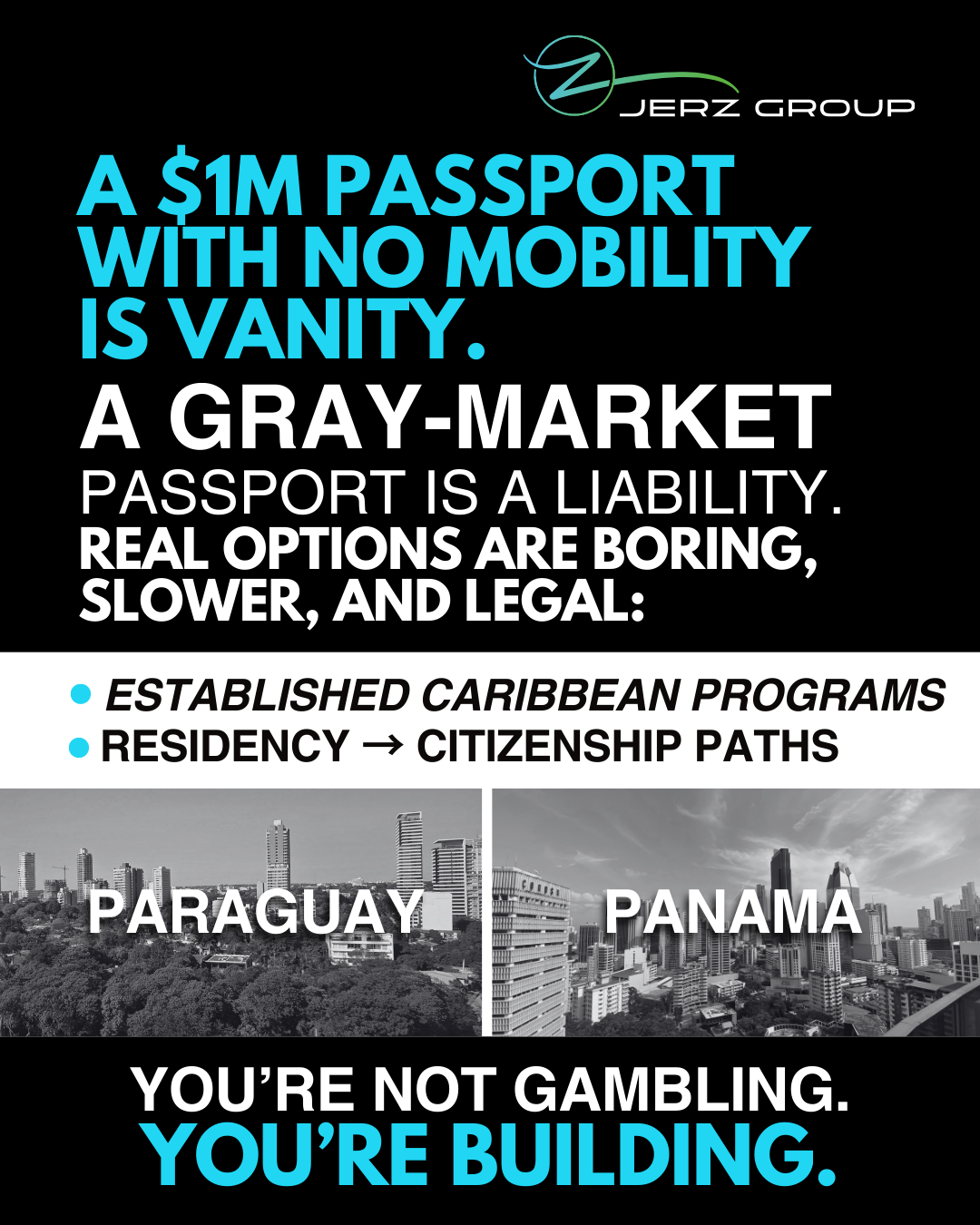
As investors search for more affordable alternatives, some African passport programs have gained attention. However, this region is also home to a significant "grey market" of unofficial brokers and questionable schemes. Navigating this landscape requires extreme caution and thorough due to diligence.
Engaging with unofficial channels for an investor visa carries immense risks, including financial loss, passport revocation, and serious legal consequences. For any investor, especially those from countries like Canada with strict compliance standards, it's crucial to distinguish between legitimate government-authorized programs and dangerous grey market traps.
How to Identify Legitimate Versus Unofficial Brokers

Distinguishing between a legitimate agent and an unofficial broker is the most critical step in protecting your investment. Legitimate CBI programs are administered through a clear legal framework, and governments publish lists of authorized agents who are licensed to handle the application process.
Unofficial brokers often operate in the shadows, making promises that seem too good to be true, such as unusually low prices, guaranteed approval, or impossibly fast timelines. They may pressure you into making payments through unconventional channels and will lack official credentials. A key red flag is any attempt to bypass the formal due diligence process.
To protect yourself, always:
- Verify the Agent: Check the official government website of the CBI program to confirm the agent is licensed and listed.
- Demand Transparency: A legitimate agent will be transparent about all fees, the legal framework, and the application process.
- Avoid "Too Good to Be True" Offers: If a deal promises citizenship for a price far below the official minimum investment, it is almost certainly a scam.
- Insist on a Formal Contract: All agreements should be documented in a professional service contract.
Political Instability and Passport Revocation Risks
One of the greatest dangers of dealing with grey market programs, particularly in regions prone to political instability, is the risk of passport revocation. A new government can come to power and declare all citizenships granted under a previous, questionable scheme to be invalid.
If your passport is revoked, you not only lose your investment but also your backup plan. This can leave you in a worse position than before, potentially creating legal issues in your home country and complicating your international travel. A passport obtained through fraudulent means is not a secure asset.
This is a significant risk that undermines the very purpose of seeking a second citizenship. The goal is to increase security, not to acquire a document that could be cancelled at a moment's notice. This is why sticking to well-established programs in politically stable countries is paramount.
The Impact on Reputation and Banking Access

Obtaining a passport through a disreputable program can cause severe and lasting damage to your personal and professional reputation. Financial institutions conduct their own due diligence, and being associated with a blacklisted or fraudulent CBI scheme can get you flagged as a high-risk individual.
This can make it extremely difficult to open a bank account, secure financing, or conduct international business. Banks are under intense pressure to enforce strict compliance and anti-money laundering (AML) regulations. A "grey market" passport is a major red flag that can lock you out of the global financial system.
In the end, the reputational damage and loss of banking access can be far more costly than the initial investment. A legitimate passport from a respected country enhances your global standing, while a questionable one does the exact opposite, creating more problems than it solves.
Top Legal Considerations for Second Citizenship Seekers
Navigating the world of second citizenship requires a solid understanding of the legal framework involved. It's not as simple as just making an investment. You need to be aware of the differences between residency and citizenship, the rules around dual citizenship in your home country, and the specific residency requirements of each program.
Failing to understand these legal nuances can lead to costly mistakes and complications. Whether you are considering a Golden Visa or a direct CBI program, being informed is your best defense. Let's break down some of the most important legal considerations you should be aware of.
Residency versus Citizenship by Investment

It's crucial to understand the difference between residency and citizenship. Residency by investment, often called a "Golden Visa," grants you the right to live in a country, but it does not give you a passport or full citizenship rights. You remain a citizen of your home country.
Citizenship by investment (CBI), on the other hand, grants you full citizenship and a passport from the host country. This is an immediate and permanent status, providing you with all the rights of a natural-born citizen, including the right to vote and hold a passport.
A Golden Visa is often a pathway to citizenship, but it typically requires you to live in the country for a number of years before you can apply for naturalization. The application process for CBI is designed to grant citizenship directly, without prior residency requirements, making it a much faster route to a second passport.
Understanding Dual Citizenship Rules in Canada
For Canadian investors, it's important to know that Canada allows dual citizenship. This means you will not have to renounce your Canadian citizenship to acquire a second one through investment. You can legally hold a Canadian passport and a passport from another country simultaneously.
However, you must always adhere to the legal and tax obligations of all countries where you hold citizenship. This requires careful planning and compliance to ensure you meet all requirements. While Canada permits it, the country you are acquiring citizenship from must also allow dual nationality.
Fortunately, most popular CBI countries, such as those in the Caribbean, also permit dual citizenship, making the process straightforward for Canadians. There are no special residency requirements you must fulfill in Canada to maintain your status while pursuing a second passport.
The Difference Between Golden Visas and CBI Programs

The primary difference between a Golden Visa and a Citizenship by Investment (CBI) program lies in the final outcome. A Golden Visa provides a residence permit, while a CBI program provides a passport and full citizenship.
Investment requirements also differ. Golden Visa programs, like those in Portugal or Greece, often focus on real estate investment and may have a lower minimum investment threshold. They grant you the right to live, work, and study in the country, but they don't immediately make you a citizen.
CBI programs, in contrast, are structured to grant citizenship directly in exchange for a significant financial contribution, either through a donation or a real estate purchase. Although the minimum investment is often higher, the reward is immediate citizenship, bypassing the long naturalization periods associated with residency programs.
Calculating the True Cost of a Second Passport
When considering a second passport, it’s a mistake to only look at the headline investment amount. The true cost goes far beyond the minimum direct investment. To get an accurate picture, you must factor in a variety of additional fees and expenses that are part of the process.
These costs include government processing fees, mandatory due diligence fees, legal advisory costs, and other administrative charges. Whether you choose a donation to a national development fund or a real estate purchase, these extra expenses can add up significantly. Let's break down what you should budget for.
Second Citizenship Cost: Investment, Fees, and Hassles

The total cost of an investor visa or second citizenship can be broken down into several components. The largest part is, of course, the main investment itself, which can range from $130,000 to over $1 million depending on the program and family size.
On top of that, you must budget for a series of non-refundable fees that are required to complete the application process. These fees cover the administrative work of the government and the extensive background checks performed on every applicant.
Here are some of the typical additional costs you can expect:
- Due Diligence Fees: These are charged for each adult applicant to cover the cost of background checks.
- Government Processing Fees: These administrative fees are often charged per person on the application.
- Legal and Advisory Fees: A licensed agent will charge for their services in preparing and submitting your application.
Hidden and Ongoing Compliance Expenses
Beyond the initial application, there may be hidden or ongoing expenses to consider. For example, if you choose a real estate investment, you will be responsible for property taxes, maintenance fees, and insurance for as long as you own the property.
Some countries also require you to renew your passport every 5 or 10 years, which involves additional fees. While these ongoing expenses are generally not substantial, they are part of the long-term cost of maintaining your second citizenship and should be factored into your financial planning.
Furthermore, navigating the complex legal framework may require ongoing legal or tax advice, especially if your financial situation changes. Staying in compliance with the laws of both your home country and your new country of citizenship is an ongoing responsibility that may come with its own costs.
Comparing Costs Across Best Second Passport Options
To make an informed decision, it's helpful to compare the all-in costs of different second passport options. A cheaper headline investment might not be the best value once all fees are considered, especially when you factor in the strength of the passport.
For instance, a Caribbean passport typically offers visa-free access to the Schengen Area, making it a powerful tool for global mobility. While a Golden Visa in Europe might seem attractive, it doesn't provide a passport immediately and often comes with physical residency requirements.
Evaluating Passport Strength: Visa Free Access and Reputation

Not all passports are created equal. The value of a second passport is largely determined by its strength, which is measured by two key factors: the number of countries you can travel to visa-free and the passport's international reputation. A passport with extensive visa-free access provides true travel freedom.
A country's reputation also matters. A passport from a well-respected, politically stable nation is more valuable than one from a country with a poor international standing. This reputation can affect how you are treated at borders and by financial institutions.
Using the Henley Passport Index for Smart Decisions
The Henley Passport Index, published by Henley & Partners, is the industry-standard tool for measuring and ranking passport strength. It is based on exclusive data from the International Air Transport Association (IATA) and provides a comprehensive overview of global visa-free access.
The index ranks passports based on the number of destinations their holders can access without a prior visa. A higher ranking indicates greater travel freedom. When evaluating CBI programs, you should always consult the latest index to compare the passport strength of your potential new country.
Using this data allows you to make a decision based on objective facts rather than marketing claims. It helps you quantify the level of global mobility you will gain and ensures your investment delivers the travel freedom you are seeking. A high score on the Henley Passport Index is a strong indicator of a valuable passport.
Checklist: What Makes the Best Second Passport in 2026
Choosing the best second passport in 2026 is about more than just the price. It requires a holistic evaluation of several factors to ensure it aligns with your long-term strategic goals. The best choice for one investor may not be the best for another.
The benefits of a second passport are only realized if the program is reputable, the country is stable, and the passport itself is powerful. It should enhance your freedom, not create new complications. A strong due diligence process on the program itself is just as important as the one they will conduct on you.
Here is a checklist of what to look for:
- High Passport Strength: Look for extensive visa-free travel to key destinations, including the EU Schengen Area, UK, and major business hubs.
- Political and Economic Stability: The country should have a stable government and a sound economy to ensure the long-term value of your citizenship.
- Reputable Program: The CBI program must have a strong international reputation and a transparent legal framework.
- Allows Dual Citizenship: Ensure both the host country and your home country permit dual citizenship.
- Favorable Tax Environment: Consider the tax implications and whether the country offers a beneficial regime for tax residents.
Strategic Global Mobility: Beyond Passport Collection

In today's complex world, simply collecting passports is an outdated strategy. Smart investors are now focused on building a comprehensive global mobility plan. This involves more than just having a backup plan; it's about strategically leveraging different jurisdictions to create true freedom and resilience.
This modern approach, known as "jurisdiction stacking," involves using dual citizenship to optimize your life across multiple domains, including travel, taxes, business, and personal security. It's about creating a web of options that no single country can take away. Let's explore what this strategy looks like in practice.
Building Flexibility and Resilience Through a Dual Citizenship Strategy
A well-thought-out dual citizenship strategy is the ultimate tool for building flexibility and resilience. It's about creating options so that you are never trapped by the decisions of a single government. This flexibility is a core reason people seek a second passport.
Having a second citizenship serves as a powerful backup plan, but its benefits are much broader. It gives you the flexibility to live, work, invest, and travel on your own terms. If one country introduces unfavorable laws or taxes, you have the freedom to pivot to another jurisdiction where you have rights.
This resilience is the true value of a strategic global mobility plan. It ensures that no matter what happens in the world (be it a pandemic, political upheaval, or economic crisis) you and your family have the freedom and security to thrive.
Avoiding FOMO: Psychological Traps in CBI Decisions
The current citizenship by investment market is rife with psychological traps. Brokers and marketers often use "fear of missing out" (FOMO) to create a sense of urgency, pressuring investors to make hasty decisions. Phrases like "last chance" and "prices are about to double" are designed to trigger an emotional response.
However, making a decision of this magnitude based on fear is a recipe for disaster. Rushing the process can lead you to overlook critical due diligence, choose the wrong program, or fall for a scam. A strategic decision requires calm, analytical thinking, not panic.
Remember that brokers are often motivated by commissions. It's essential to step back, ignore the hype, and focus on your own long-term goals. A thorough due diligence process, both on the program and on your own needs, is the best antidote to these psychological traps and a key part of managing the risks of Caribbean citizenship.
Follow Jerz


